
UK Home Renovation Trends Shaping How Britain Builds in 2026
Updated: 5 days ago
From staying put to solar on the roof, the way British homeowners plan, budget and build has shifted, and the data shows where.
Renovation trends are usually written as lists of colours and finishes. Those matter, but the bigger changes in 2026 are structural: how long people expect to stay in a house, how much they are prepared to spend, and what the regulations now expect of a building.
We have kept this list to trends we can stand behind. Each one is backed by published survey data, by a rule that exists, or by what we and other builders are being asked for on site. The headline numbers behind them:
71% of renovating homeowners plan to stay 11 years or more (Houzz 2026).
The median planned renovation spend for 2026 is £10,000, down from £14,000 (Houzz 2026).
51% of kitchen renovators change the size of the room (Houzz Kitchen Trends 2026).
369,000 certified renewable installations went in during 2025 (MCS).
Only 42% of homes in England have 200mm or more of loft insulation (English Housing Survey).
145,600 householder planning decisions in England in the year to June 2026, 90% granted.
1. Staying Put and Improving Instead of Moving
The clearest signal in the 2026 UK Houzz & Home Study is commitment. More than seven in ten renovating homeowners (71%) plan to stay in their home for 11 years or more, and nearly two in five (39%) consider it their forever home.
Nationwide's October 2025 survey of homeowners who had renovated in the last five years found the same thing from the other direction: just 7% were renovating in preparation for a sale, while 26% were doing it to add more space.
That changes the brief. People who are staying choose layouts and materials for how they live, not for what an estate agent might say.
2. Tighter Budgets and Projects Done in Phases
Houzz also found that the median planned renovation spend for 2026 has fallen to £10,000, from £14,000 a year earlier. Appetite has not dropped in the same way: 46% of the homeowners surveyed still planned to renovate during the year.
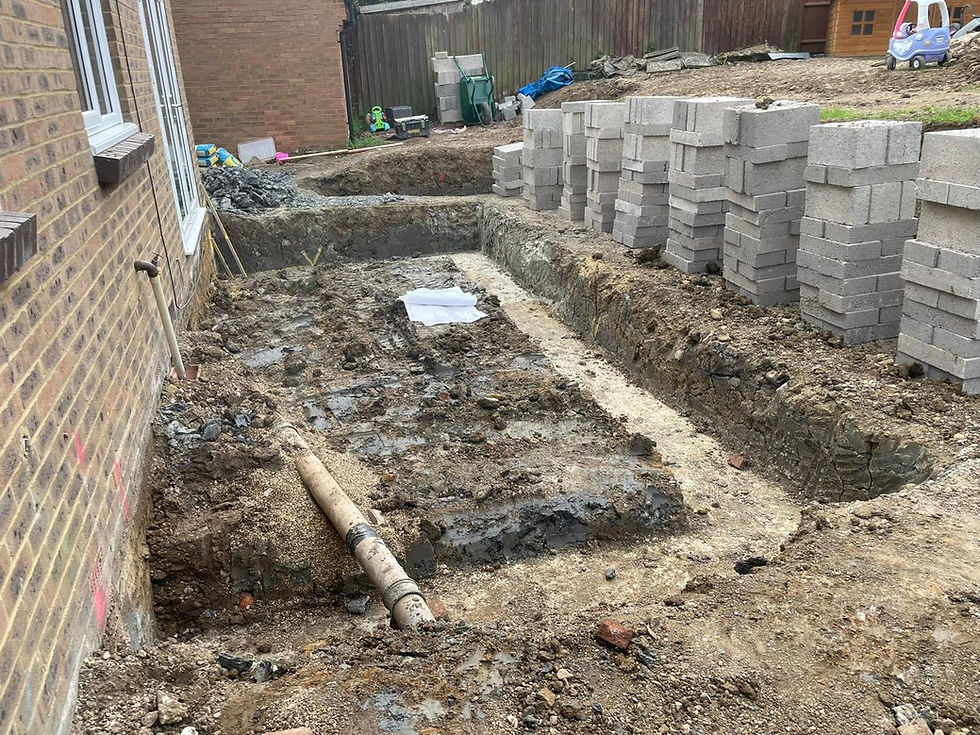
The result, in our experience, is more phased work. A household builds the extension shell and kitchen now and leaves the loft or the garden for a later year. It is a sensible approach as long as the first phase is designed with the second in mind, with drainage, structure and electrics sized for what is coming.
The same study found 38% of renovators went over budget and 26% never set one, which is the strongest argument for a detailed, itemised quote before work starts.
3. Bigger, More Open Kitchens With Bolder Colour
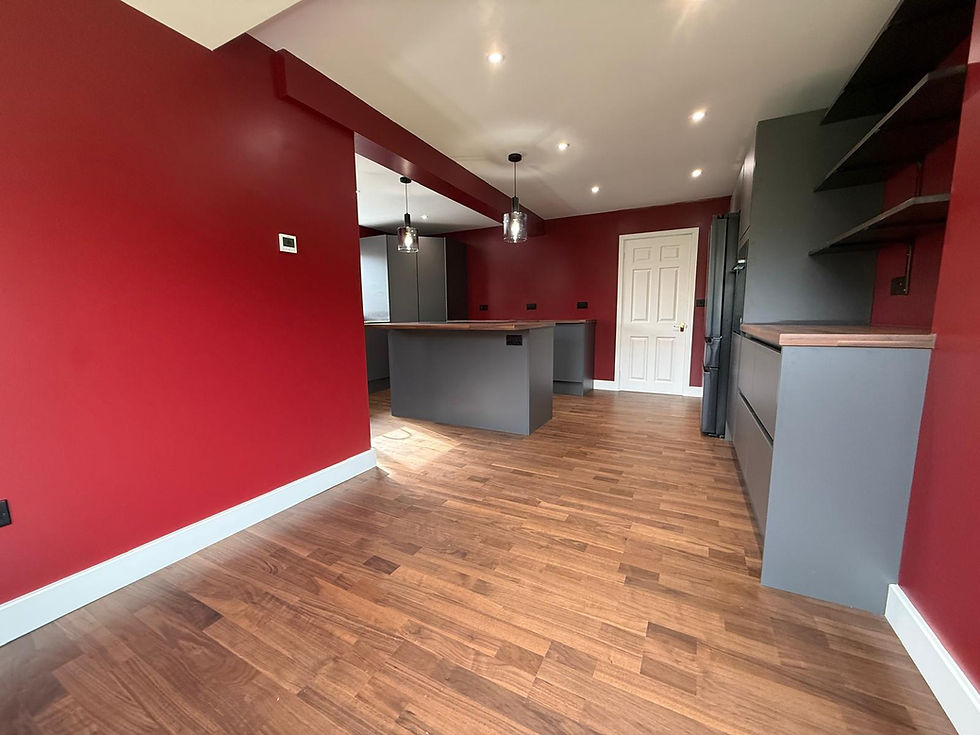
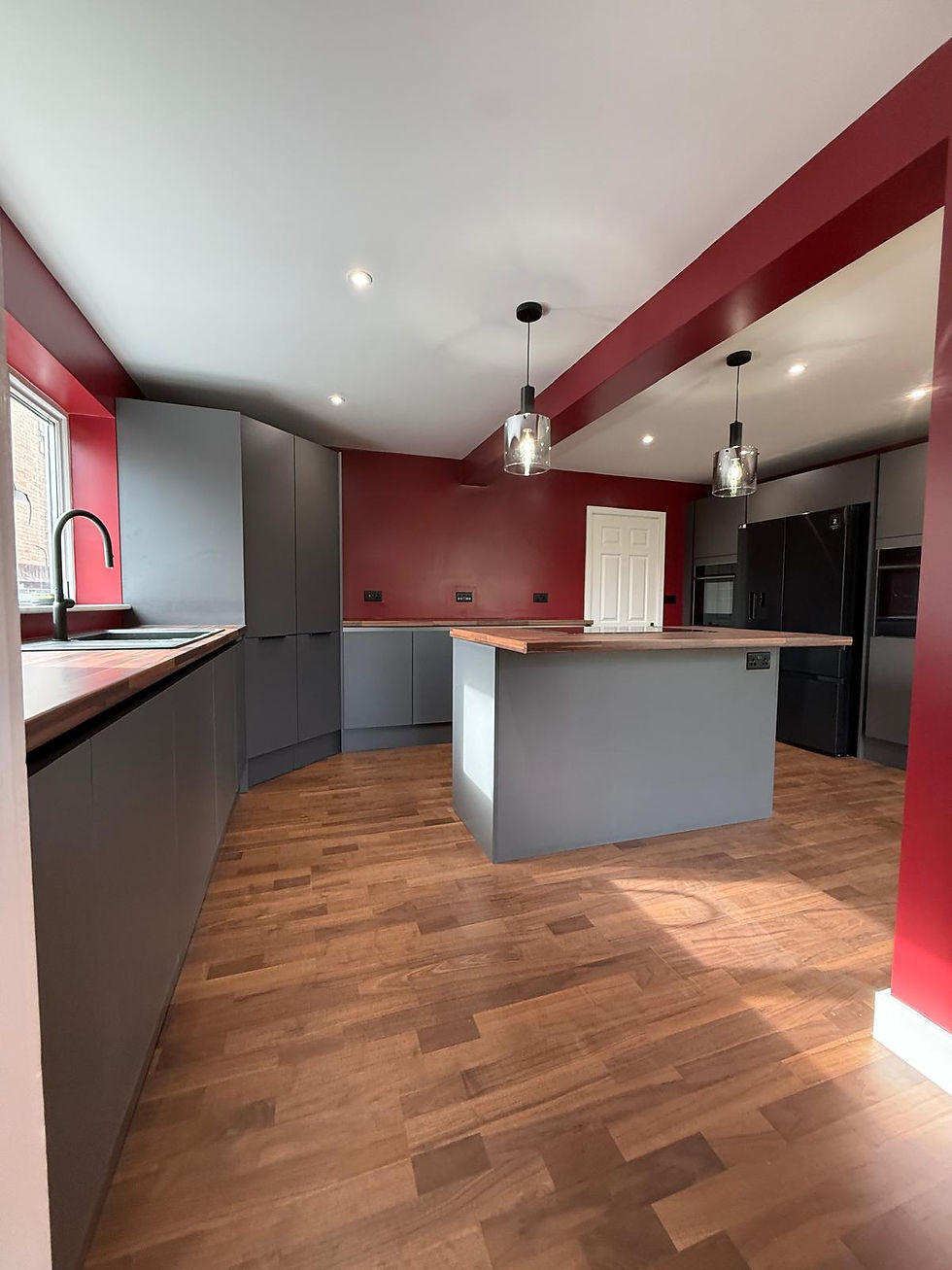
The 2026 UK Houzz Kitchen Trends Study, a survey of more than 400 UK homeowners published in January 2026, found that half of renovating homeowners (51%) change the size of their kitchen, and 23% enlarge it by more than 50%. Kitchens are absorbing dining rooms, side returns and rear extensions.
Colour has moved on too. Blue is now the most popular cabinet colour in renovated kitchens (18%), closely followed by green (17%), both ahead of grey at 12%. Storage is being taken seriously, with 40% adding pantry cabinets.
For anyone planning kitchen fitting in Kettering or kitchen fitting in Oundle, the practical point is that a bigger kitchen is usually a building job first and a fitting job second.
4. Kitchens and Bathrooms Planned for Later Life
Because people are staying longer, they are designing for their older selves. In the Houzz kitchen study, over half of renovating homeowners (55%) addressed current or future special needs in their kitchen renovation.
Bathrooms show it most clearly. Nationwide found that bathroom renovation was the most popular improvement among homeowners aged 55 and over, chosen by 68% of those who had made improvements. On site, that translates into walk-in showers, level thresholds, wider doorways and a wet room in place of a bath that is becoming hard to climb into.
Done well, none of this looks like an adaptation. It looks like a good bathroom.
5. Solar, Batteries and Heat Pumps Move Into the Mainstream
MCS, which certifies small-scale renewable installations, recorded 369,000 certified installations in UK homes and small businesses in 2025, the highest annual total it has reported. Rooftop solar accounted for 267,032 of them, with more than 60,000 heat pumps and more than 40,000 batteries.
Regulation is pushing the same way. The Future Homes Standard was published in March 2026, and the building regulations that bring it in take effect in England on 24 March 2027, with a transition period for schemes already under way. New homes will need low-carbon heating and on-site renewable electricity generation, which in practice means solar panels on most of them. The government's Warm Homes Plan, published in January 2026, commits £15 billion of public investment to upgrading up to 5 million homes by 2030.
For existing houses, the trend we see is solar being designed into extensions and loft conversions from day one, while the scaffolding is already up.
6. Insulation First, Finishes Second
The English Housing Survey shows how far there is still to go. In 2024, 56% of homes in England were in energy bands A to C, but only 42% had 200mm or more of loft insulation and 54% had cavity or solid wall insulation.
The message that a heat pump or a new boiler performs best in a house that holds its heat is getting through. So the order of work we are asked for is changing: insulate, deal with draughts and ventilation, then choose the heating.
Building regulations already apply insulation and ventilation standards to any new extension. The opportunity is to treat the old part of the house to the same thinking while the trades are there.
7. Rooms That Earn Their Keep
The Office for National Statistics reported that 28% of working adults in Great Britain hybrid worked between January and March 2025. A desk at the end of the dining table was tolerable for a year. It is not a long-term plan.
That is feeding demand for proper workspace: a loft room with real headroom, a study carved out of an extension, or one of the garden room ideas built for year-round use. Nationwide's survey found that 39% of homeowners who had renovated in the last five years had added an outbuilding.
The common request is separation. People want to close a door on work, which shapes where the room goes and how it is insulated and wired.
8. Fewer Planning Applications, Better Prepared
Government statistics for England show 145,600 householder planning decisions in the year ending June 2026, down from 159,600 the year before. Approval rates stayed high, with 90% granted.
Fewer applications are going through, but in our experience the people who do apply arrive better prepared, often with an idea of what permitted development already allows. In April to June 2026, larger householder extensions made up 57% of all the permitted development applications reported to government.
The lesson is to establish which route a project needs before paying for a full design.
9. Homeowners Checking Builders Harder
Trust is now a deciding factor. Research by Opinium for the Federation of Master Builders and the HomeOwners Alliance in April 2025 found that 45% of UK homeowners wrongly believe builders must be licensed, and 81% support a mandatory licensing scheme for residential builders.
Until that exists, the checks fall to the customer, and what we hear across the trade is that customers are doing more of them: asking for insurance certificates, references they can ring and proof of trade body membership before accepting a quote. As FMB members, we think that is a healthy change.
A written, itemised quote and a proper contract remain the simplest protection.
10. Driveways and Front Gardens That Drain
Outside the house, the shift is towards surfaces that handle rain. Under planning rules in England, a new or replacement front driveway of more than five square metres needs planning permission unless it uses a permeable surface or drains to a lawn or border.
That rule is steering homeowners towards resin bound surfacing, permeable block paving and gravel, usually with planting kept along the edges. We have set out the detail in our post on driveway planning permission.
It is one of the few cases where the compliant option is usually also the better-looking one.
Looking Ahead
What links these trends is a longer view. Homeowners who expect to stay a decade or more are spending more carefully, building for how they will live in later years, and asking harder questions about energy, drainage and who is doing the work.
The pressure points are real, and our UK home improvement statistics put numbers on them. The Federation of Master Builders reports that 49% of the members it surveyed had jobs delayed by a lack of skilled tradespeople in the second half of 2025, so the best-run projects in 2026 are the ones planned early and specified in full.
Thinking about more space at home? See how we approach home extensions in Kettering and across Northamptonshire.
Comments