
Top 10 UK Home Improvement Statistics Every Homeowner Should Know (2026)
Updated: 2 days ago
Home improvement is one of the biggest things most households ever spend money on, and yet most people go into it with very little data. They know what a neighbour paid and what the first quote came back at. The national figures tell a fuller story.
We have pulled together ten statistics from official surveys, planning data, lender research and trade bodies. They are for homeowners weighing up a project, and for anyone in the trades who wants to know where the work is heading. Each one names its source and the year the data covers. In brief:
49% of homeowners in Houzz's UK survey renovated in 2025, at a median spend of £20,000.
Kitchens, bathrooms and bedrooms tie as the most renovated rooms, at 27% each.
English councils decided 145,600 householder applications in a year and granted 90%.
A loft conversion or extension with a bedroom and bathroom can add up to 24% to a home's value (Nationwide).
56% of English homes now reach energy band C or better, up from 26% a decade ago.
A record 369,000 certified renewable installations were completed in the UK in 2025.
4 million English homes fail the Decent Homes Standard and 1.4 million have damp.
Building material prices rose 5.9% in the year to July 2026.
Construction needs 41,200 extra workers a year, and 49% of small builders report delays.
Citizens Advice took more than 36,500 home improvement complaints in a year.
1. Almost Half of Homeowners in Houzz's UK Survey Renovated in 2025, at a Median Spend of £20,000
The 2026 UK Houzz & Home Study, a survey of more than 1,000 UK users of the Houzz home design platform carried out between March and June 2026, found that 49% of homeowners had renovated during 2025. The median spend on those renovations was £20,000, slightly down from £21,440 in 2024. The top 10% of projects came in at £115,000 or more.
One caution: people who sign up to a renovation website are keener renovators than the country as a whole, so this describes active improvers, not every household.
The more useful figure for anyone planning work is about budgets. Houzz found that 38% of renovating homeowners spent more than they planned, a third (33%) finished on budget, and 26% started without setting a budget at all. In our experience the overspend rarely comes from the builder's price. It comes from decisions made after work has started.
The takeaway: a median is a midpoint, not a quote. Fix the specification before the job starts and the budget has a far better chance of holding.
2. Kitchens, Bathrooms and Bedrooms Tie as the Most Renovated Rooms, at 27% Each
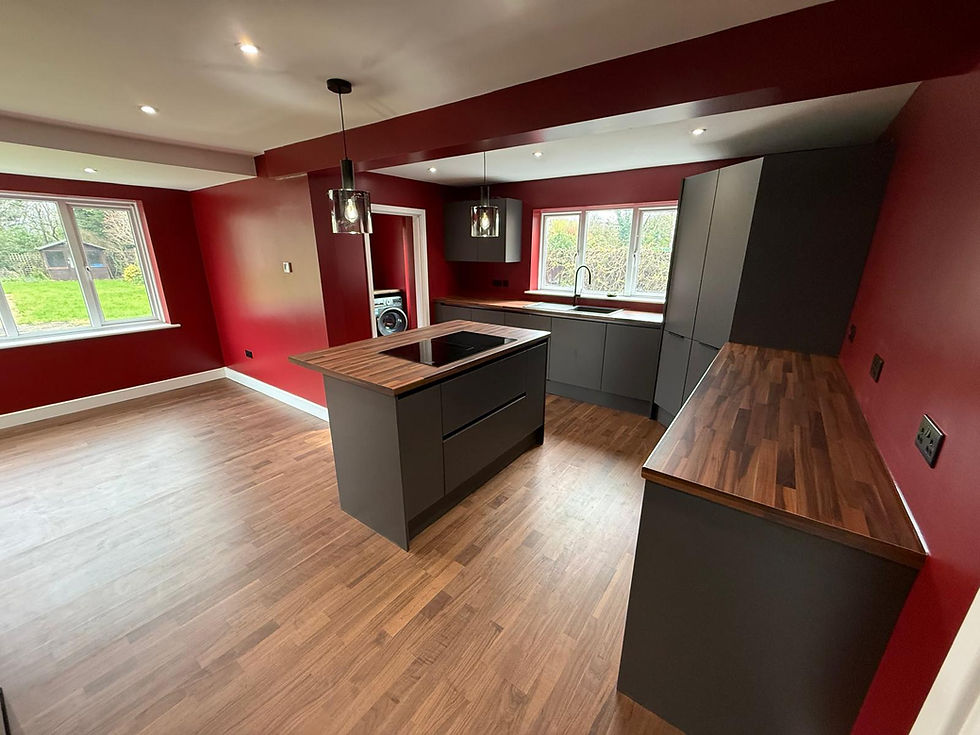
In the same 2026 Houzz study, bathrooms, kitchens and bedrooms were the joint most popular interior projects, each tackled by 27% of renovating homeowners.
Nationwide's home improvement research, published in October 2025 and based on a Censuswide survey of 2,000 homeowners, points the same way over a longer period. Of the 1,285 who had renovated in the last five years, 71% had redone a kitchen, a bathroom or both, and 42% had added a bathroom or an ensuite. Outdoor space featured too: 39% had added an outbuilding such as a shed or an entertainment space, though whether garden rooms add value to the sale price is a separate question.
Nationwide is careful to say it cannot put a price on a kitchen or bathroom refit from its house price data, which is worth keeping in mind when asking how much value a new bathroom adds.
The takeaway: the rooms with the most plumbing and wiring in them are the rooms Britain renovates most, so the quality of the trades behind the tiles matters more than the tiles.
3. Councils in England Decided 145,600 Householder Applications in a Year and Granted 90%
Government planning statistics for England, published in September 2026, show that in the year ending June 2026, councils made 145,600 decisions on householder developments, the category that covers extensions, loft conversions and similar work to an existing house. That was half of all planning decisions made, and 90% of those applications were granted.
The volume has fallen. In the year ending June 2025 the figure was 159,600 decisions, so 14,000 fewer householder applications were decided in the latest twelve months.
Approval is not automatic, though. The statutory decision period for a householder application is eight weeks, and we have written separately about how long planning permission takes for an extension in practice.
The takeaway: nine in ten householder applications are approved, so planning is a process to prepare for, not a reason to shelve a project.
4. A Loft Conversion or Extension With a Bedroom and Bathroom Can Add Up to 24% to a Home's Value
Nationwide's analysis of its own house price data, published in October 2025, found that a loft conversion or extension incorporating a large double bedroom and a bathroom can add as much as 24% to the value of a three-bedroom, one-bathroom house. The calculation assumes 28 square metres of extra floor area.
Creating an additional double bedroom can add 13% to the value of a two-bedroom house, and a 10% increase in floor space, all else equal, adds 5% to the price of a typical house. In the accompanying survey, 24% of homeowners who had renovated in the last five years had converted a loft and 21% had built a single storey extension.
The phrase that matters is "as much as". These are estimates modelled from Nationwide's own UK mortgage data, not a promise for any one house (whether a loft conversion adds value to yours depends on the space you gain), and Nationwide itself says location remains key to value. The room also has to be genuinely usable, and building regulations always apply to a loft conversion, covering structure, fire escape, stairs and insulation. Even so, the figures explain why loft conversions in Kettering and elsewhere are so often the first option a growing family looks at.
The takeaway: usable bedrooms add value, and extra floor area without one adds much less.
5. 56% of English Homes Now Reach Energy Band C or Better, Up From 26% a Decade Ago
The English Housing Survey 2024 to 2025 reports that 56% of dwellings in England were in energy efficiency bands A to C in 2024, compared with 26% in 2014.
The survey puts the average (mean) cost of bringing a home below band C up to that level at £7,480, rising to £7,869 for owner-occupied homes, which are the most expensive tenure to improve.
In 2024, 54% of dwellings had cavity or solid wall insulation and only 42% had 200mm or more of loft insulation, while 89% had full double glazing. Windows have largely been dealt with. Lofts and walls have not.
The takeaway: if an extension or loft conversion is already opening up the roof and walls, that is the cheapest moment to insulate the rest of the house properly.
6. A Record 369,000 Certified Renewable Installations Were Completed in the UK in 2025
MCS, the body that certifies small-scale renewable installations, reported in February 2026 that 369,000 certified installations went into UK homes and small businesses during 2025. That was 34% more than in 2024 and the highest annual total on record.
Rooftop solar led the way with 267,032 installations. There were also more than 60,000 certified heat pump installations and more than 40,000 battery storage installations.
Nationwide's survey shows the same appetite: 34% of those who had improved their home in the last five years made green improvements, and over half of that group (56%) added solar panels.
The takeaway: solar is increasingly part of a renovation, so roof structure, scaffolding and cable routes are worth planning in from the start instead of retrofitting later.
7. 4 Million English Homes Fail the Decent Homes Standard and 1.4 Million Have Damp
The English Housing Survey found that 15% of dwellings in England, around 4.0 million homes, failed the Decent Homes Standard in 2024. Owner-occupied homes were not exempt: 15% of those failed as well.
Damp is a growing part of the picture. In 2024, 5% of dwellings, or 1.4 million homes, had a problem with damp, up from 4% in 2022.
Repairs are taking up more of the work being done as well. In Houzz's 2026 UK study, 44% of the homeowners surveyed made repairs during 2025, up from 39% in 2024. Failed gutters, leaking flat roofs and bridged damp-proof courses are typical of what needs putting right before an extension begins.
The takeaway: fix water first. A new kitchen in a house with a damp problem is money spent in the wrong order.
8. UK Building Material Prices Rose 5.9% in the Year to July 2026
The Department for Business and Trade's monthly building materials statistics show that the material price index for all construction work was 5.9% higher in July 2026 than in July 2025. Materials for repair and maintenance work rose 5.5% over the same period.
The average hides big differences between products. Fabricated structural steel was up 20.9% on the year, rigid pipes and fittings were up 15.5% and flexible pipes and fittings 11.7%. Cement went the other way, falling 3.5%. Brick deliveries in Great Britain in July 2026 were 22.8% lower than a year earlier.
The takeaway: material costs move month to month, so compare quotes written in the same few weeks and check how long each price is held.
9. Construction Is Forecast to Need 41,200 Extra Workers a Year, and 49% of Small Builders Report Delays
The Construction Industry Training Board's Construction Workforce Outlook 2026-2030, published in June 2026, forecasts that the UK industry will need an average of 41,200 extra workers every year between 2026 and 2030.
The shortage is already felt on domestic jobs. The Federation of Master Builders' State of Trade Survey for July to December 2025 found that 49% of the members surveyed had jobs delayed by a lack of skilled tradespeople. Carpenters were the hardest role to fill (30%), followed by bricklayers (29%) and plumbers and heating engineers (23%).
Homeowners rely heavily on those trades. In the 2026 Houzz study, 92% of renovating homeowners hired at least one professional during 2025. Among the specialist trades, electricians (56%) and plumbers (54%) were hired most often.
The takeaway: good tradespeople are booked well ahead, so start the conversation early, particularly for home extensions in Kettering and other projects that need several trades in sequence.
10. Citizens Advice Took More Than 36,500 Home Improvement Complaints in a Year
Citizens Advice reported in August 2025 that its consumer service received 36,534 complaints about home maintenance and improvements between 1 July 2024 and 30 June 2025. That is more than 700 a week. Roofing, roof sealing and chimney repairs drew the most, at 8,126. Major renovations, which include lofts, conversions and extensions, came second with 4,365.
Survey data suggests the problem is wider than the complaints that get logged. Opinium research for Citizens Advice, published in July 2026, found that a quarter of homeowners had a problem with their most recent repair job. A Federation of Master Builders survey of 2,051 UK adults, published in July 2025, found that 37% had hired a builder who turned out to be unreliable or unqualified.
Part of the cause is a gap in what people assume. Research by Opinium for the FMB and the HomeOwners Alliance in April 2025 found that 45% of UK homeowners wrongly believe builders have to be licensed. They do not, which is why trade body membership, insurance and references carry so much weight.
The takeaway: nobody licenses builders in the UK, so the checking falls to the customer. Do it before the deposit, not after.
The Bigger Picture
These ten numbers describe a country still investing heavily in its homes, and the home renovation trends for 2026 show where that money is going. Close to half of the homeowners Houzz surveyed renovated in a single year, nine in ten householder planning applications in England are approved, and the right project can add real value. At the same time material prices are rising, skilled people are scarce and tens of thousands of jobs end in a complaint.
The common thread is preparation. The projects that hold their budget are specified before they start, and the homes that gain value are the ones where the new space is usable, insulated and signed off.
As Federation of Master Builders members based in Kettering, we see these figures play out on jobs across Northamptonshire, from kitchens in Kettering to home extensions in Daventry. The numbers will change next year. The advice that follows from them mostly will not.
Statistics sourced from the 2026 UK Houzz & Home Study, Nationwide Building Society, the Ministry of Housing, Communities and Local Government planning application statistics, the English Housing Survey 2024 to 2025, MCS, the Department for Business and Trade, the Construction Industry Training Board, the Federation of Master Builders, the HomeOwners Alliance and Citizens Advice. All figures correct as of September 2026.


Comments