
Party Wall Agreement: What It Is, When You Need One and How It Works
Updated: 2 days ago
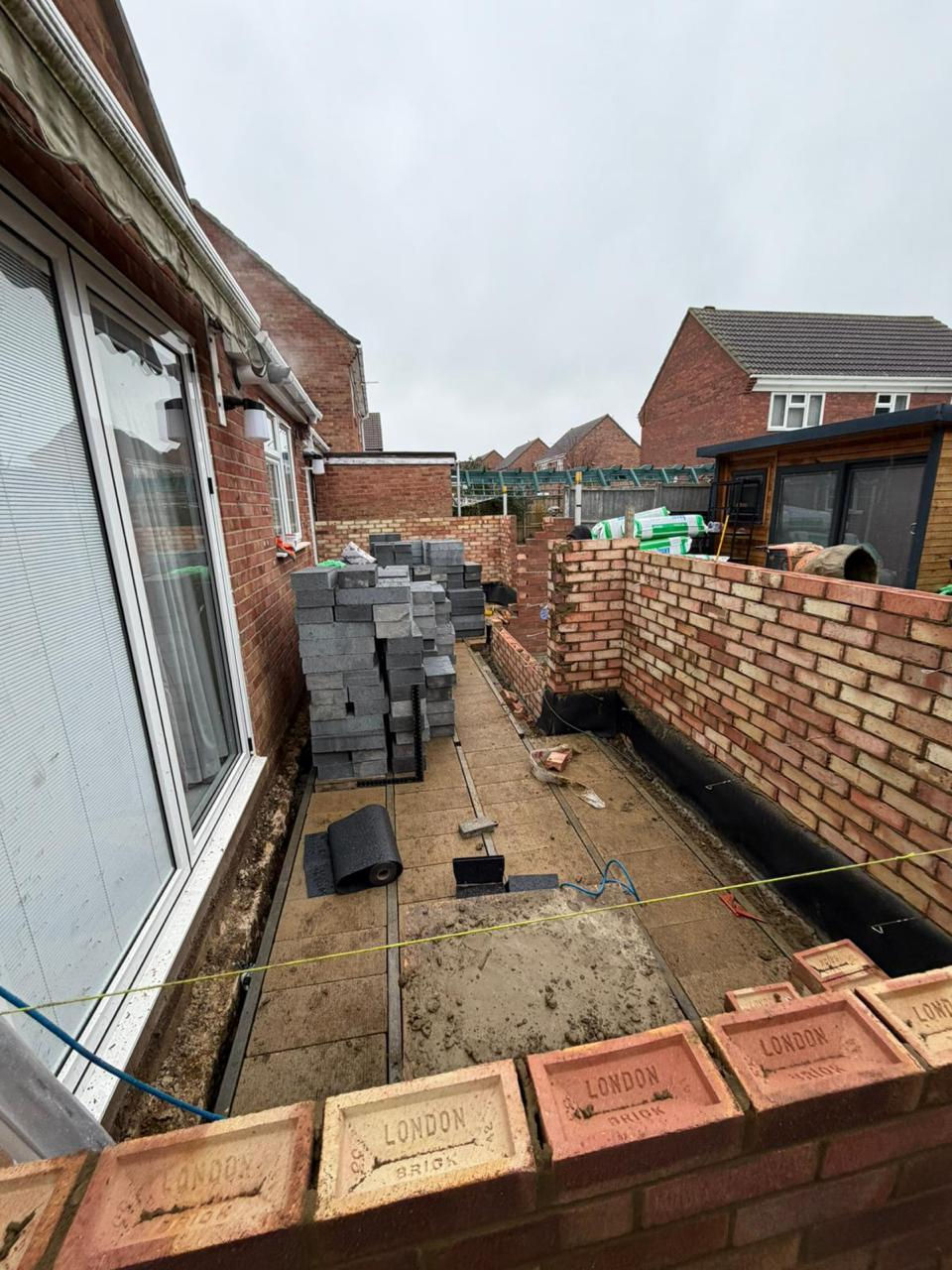
A party wall agreement is the written consent, or the surveyor's award, that lets you carry out building work covered by the Party Wall etc. Act 1996. You need one when your work affects a wall or floor you share with a neighbour, when you build a new wall on the boundary line, or when you dig foundations close to a neighbour's building. It is separate from planning permission and building regulations, and you need it even when neither of those applies.
What counts as a party wall?
A party wall is a wall that stands astride the boundary between two properties, or one that sits on one owner's land but is used by both, such as the wall between two semi-detached houses or terraces. The Act also covers party fence walls (a garden wall on the boundary line that isn't part of a building) and party structures, such as the floor between two flats. Wooden fences are not covered, so which fence is yours is a question for the deeds rather than the Act.

The Act matters for most house extensions and loft conversions on semi-detached and terraced homes, because the work almost always touches the shared wall or digs near the neighbour's footings.
When does the Party Wall Act apply?
There are three groups of work, and each has its own notice period.
Existing party wall (section 2): Cutting into it to take the bearing of a steel beam, raising it, underpinning it, inserting a damp proof course or removing chimney breasts that are bonded into it. Notice: at least 2 months before work starts.
New boundary wall (section 1): Building a new wall astride or right up against the boundary. Notice: at least 1 month.
Excavation nearby (section 6): Digging within 3 metres of their building and deeper than the bottom of their foundations, or within 6 metres where the dig would cut a line drawn at 45 degrees down from the bottom of their foundations. Notice: at least 1 month.
Foundations for a rear or side extension often trigger section 6 on their own. Our guide to the depth of foundations for a single storey extension explains why extension footings are often deeper than the neighbour's older ones.
The Act does not cover minor work such as fixing shelves or kitchen units to a party wall, replastering it or rewiring through it.
Does a loft conversion need a party wall agreement?
Usually, yes, on a semi or terrace. Most loft conversions put new steel beams into the party wall to carry the new floor and the dormer or hip-to-gable structure, and cutting pockets into the wall for those bearings is section 2 work. So the notice period is 2 months. If you're planning loft conversions in Kettering or anywhere nearby, serve notice early, because it can hold up the start date.
How the party wall process works
The process runs in a set order.
Serve notice. You, as the building owner, serve written notice on each adjoining owner, describing the work and the start date. Anyone with an interest in the neighbouring property can count as an adjoining owner, including a landlord and a tenant on a long lease.
The neighbour responds within 14 days. They can consent in writing, or dissent. If they don't reply within 14 days, a dispute is treated as having arisen.
Consent means no award is needed. You can start once the notice period has run. Many builders still recommend a photographic schedule of condition of the neighbour's side before work starts, so that any later claim of damage can be checked against it.
Dissent or silence means surveyors. Both owners either appoint one agreed surveyor or one surveyor each. The surveyors then prepare a party wall award.
The award. This sets out what work can be done, how and when, records the condition of the neighbour's property, and says who pays for what. Either owner can appeal to the county court within 14 days of receiving it.
Notice lapses if the work hasn't started within a year of it being served.
Who pays for the party wall surveyor?
In most cases the building owner (the person doing the work) pays the reasonable fees of both surveyors, because the work is for their benefit. That's one reason to talk to the neighbours before serving notice. A neighbour who understands the job and consents in writing saves both sides time and cost.
How a party wall agreement fits with the rest of the project
The party wall process sits alongside planning and building regulations; it doesn't replace either. A typical order on a rear extension is drawings, then planning or a permitted development check, then structural design, then party wall notices, then building regulations approval, then the start on site. Because the notice periods are fixed minimums, the notices should go out as soon as the structural design shows what will happen at the shared wall.

The steelwork is often the trigger. If you are opening up the back of the house, our post on the RSJ beam explains where the steel bears and why that bearing so often sits in the party wall.
What happens if you don't serve notice?
The Act has no criminal penalty, but a neighbour can seek a court injunction to stop the work until the process is followed, and you lose the protection the award gives you if a dispute about damage comes up later. It can also cause problems when you sell, because buyers' solicitors ask whether party wall matters were dealt with.
Party wall agreement questions, answered
Can I serve a party wall notice myself?
Yes. The notice must be in writing and contain the information the Act requires. gov.uk publishes guidance on what to include. Many owners use a surveyor to draft it so it's valid first time.
Does a detached house need a party wall agreement?
Only if the work triggers the excavation rules (digging within 3 or 6 metres of a neighbour's building, as above) or you build a wall on the boundary line. A detached house has no shared wall, but a deep extension footing near a neighbour's garage can still need notice.
How long does a party wall agreement last?
The notice is valid for a year if work doesn't start. Once work starts, the award covers the work it describes until that work is finished.
We deal with party wall matters as part of planning home extensions in Kettering and loft conversions in Corby, and we time the notices around the build programme so they don't delay the start. You can read the official guidance on party walls and building work at gov.uk, or contact us if you want to talk through what your project will trigger.

Comments