
Gravel Driveways: Types, How to Lay One and When It Works
Updated: 20 hours ago

A gravel driveway is loose stone laid over a compacted sub-base and held in by edging. It is the quickest and usually the cheapest of the driveways in Kettering we build, it is naturally permeable, and it suits cottages and country houses particularly well. The catch is upkeep: gravel moves, ruts and scatters unless it is laid on a proper base with good edging, and ideally with a stabilising grid.
Is a gravel drive right for your house?
Gravel works well when:
You want a permeable drive that meets the front garden drainage rules with no extra drainage.
The drive is fairly level. Loose gravel migrates downhill on slopes.
You like a softer, traditional look, and the crunch underfoot (a small security bonus).
Budget matters and you would rather spend on a good base than on an expensive surface.
It is a poorer fit when:
The drive is steep, or cars regularly turn tightly on it.
You use a wheelchair, pushchair or wheelie bins across it daily.
Gravel would spill onto a pavement or road at the entrance.
You want a surface you can simply sweep.
Choosing the right gravel
Not all gravel is suitable for cars. The best driveway gravel is angular and in the 14mm to 20mm range. Angular stones lock together, and that size is big enough not to stick in tyre treads or be carried indoors, and small enough to walk on comfortably.
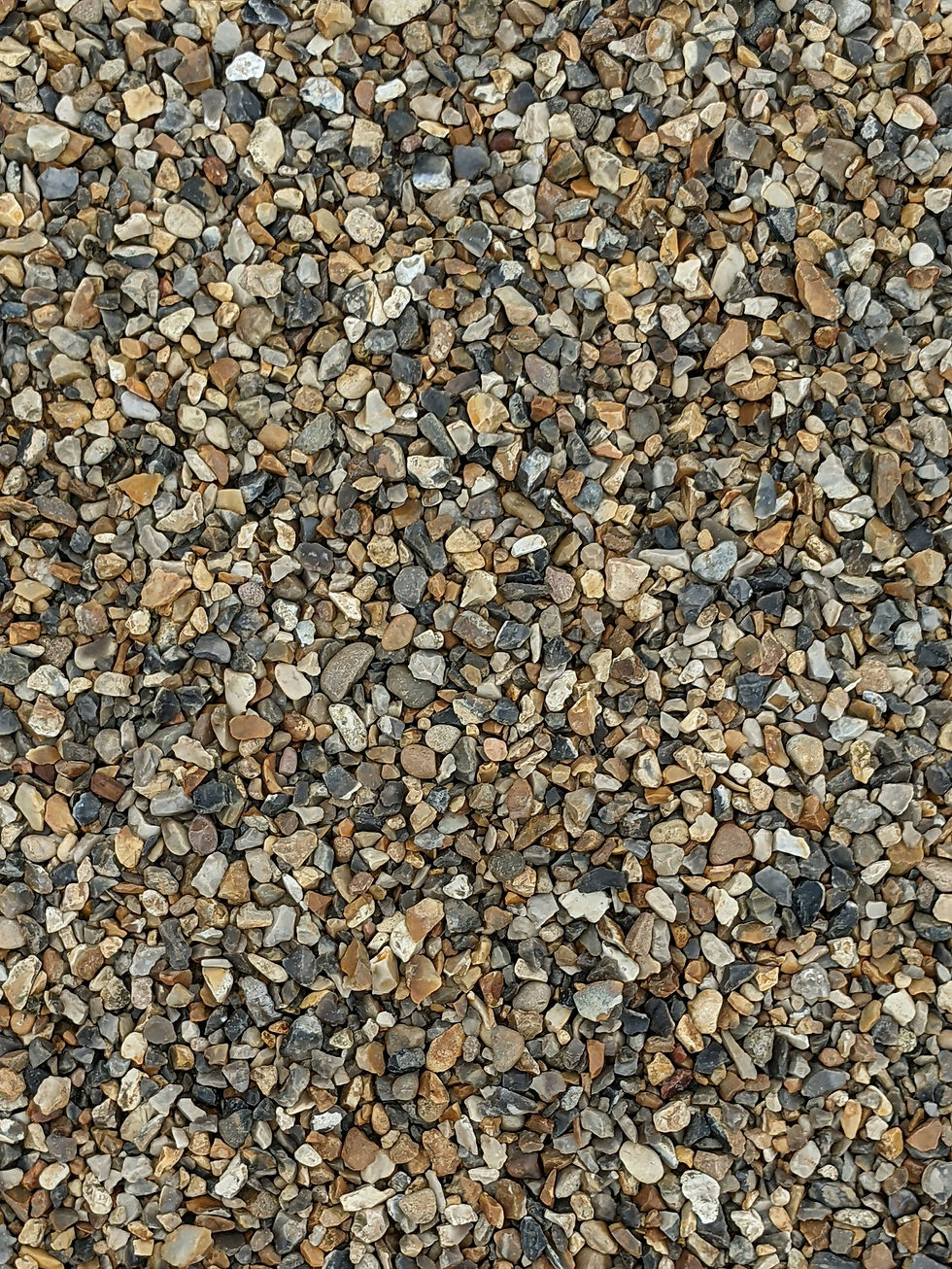
Common choices:
Angular chippings (14 to 20mm): limestone or granite, hard-wearing, lock well, many colours.
Flint or quartzite: attractive, but rounded pea shingle moves more underfoot.
Slate chippings: striking but can break down under heavy use.
Avoid small rounded pea gravel on a main drive. It rolls like ball bearings, ruts quickly and walks into the house.
How to lay a gravel driveway properly
The difference between a gravel drive that lasts and one that turns into a rutted mess is the work under the stones. The steps:
Dig out. Excavate to allow for the sub-base and gravel, commonly around 150mm to 250mm depending on the ground and the traffic. Soft spots are dug out and replaced.
Membrane. Lay a geotextile membrane to separate the sub-base from the soil and slow down weeds. It lets water through.
Sub-base. Lay a Type 1 or Type 3 (more permeable) crushed stone sub-base in layers, compacting each with a vibrating plate or roller.
Edging. Fix solid edging (block, brick, kerb or steel) on a concrete haunch so the gravel stays in and the edges do not spread.
Stabilising grid (recommended). Lay a honeycomb gravel grid over the sub-base and fill it. It stops ruts, keeps the depth even and makes the drive easier to walk and wheel on.
Gravel layer. Spread gravel to around 40mm to 50mm deep. Too thin and the base shows; too deep and cars sink in and it is hard to walk on.
That is how to gravel a driveway so it stays level. Skipping the sub-base or edging is the most common reason gravel drives fail within a few years.
The entrance and the pavement
Loose gravel near the pavement ends up on the pavement. If the drive meets the public footway, finish the first metre or so in a hard surface (block paving, a resin strip or a concrete apron) so stones are not carried onto the highway. Many councils expect this with a new dropped kerb.
Drainage and planning
Gravel is permeable, so a gravel front drive laid over a free-draining base meets the rule on front gardens without planning permission. The driveway planning permission rules still matter if the drive also needs a new dropped kerb or is next to a listed building.
On clay soils, water can sit in the sub-base in winter. A more open Type 3 sub-base and sensible falls help it drain.
Gravel vs other driveway surfaces
Against resin bound: resin gives a smooth, fixed surface with no loose stones and is still permeable, at a higher cost. It is the natural upgrade if you like the look of gravel but not the upkeep, and it is more durable than many people expect.
Against block paving: block paving is fixed, easy to repair and traditional, but costs more and is not permeable unless designed to be.
Against imprinted concrete: an imprinted concrete driveway is a patterned slab that is low maintenance but hard to repair invisibly.
We lay gravel, resin and block drives across Northamptonshire, and the trade-off with gravel is always cost against upkeep.
Looking after a gravel drive
Rake it level every few weeks, especially where cars turn.
Top up with matching gravel every couple of years as it sinks and scatters.
Pull or treat weeds while small. A membrane slows them, but seeds still land on top.
Clear leaves regularly, because they rot into the gravel and feed weeds.

Gravel driveways: questions, answered
How deep should driveway gravel be?
Around 40mm to 50mm over a compacted sub-base, or enough to fill a stabilising grid with a thin cover on top. More than that and cars sink and walking gets hard.
Do gravel grids really work?
Yes. A honeycomb grid holds the gravel in cells, which stops ruts and keeps the depth even. It is the single best upgrade for a gravel drive.
Can you lay gravel over an old concrete drive?
You can, but water will not drain through the concrete, so it is no longer permeable, and the gravel slides around on the hard surface. It usually works better to break out the concrete and lay a proper sub-base.
Is gravel the one for you?
If your drive is level, you like the look and you do not mind a rake now and then, gravel on a proper base gives a lot of drive for the money. If you want the look without the loose stones, resin bound is worth pricing too. Our team can advise on either, alongside new patios in Kettering or paving in Oundle for the back garden, laid on the same kind of compacted sub-base we describe in how to lay a patio.


Comments