
Exterior House Painting: How to Plan It and Make It Last

Exterior house painting is mostly about preparation and timing. Repair the surfaces first, paint in a dry spell between late spring and early autumn, and use the right paint for each material: breathable masonry paint on walls, exterior wood paint or stain on timber, and a metal system on railings and gutters. Get those three right and the finish lasts for years. Get them wrong and it peels within a season or two.
Start with a survey of the outside
Before choosing colours, walk round the house and note what needs fixing:
Cracked or blown render and missing pointing.
Rotten timber on windows, fascias, bargeboards and doors.
Rusting metal on railings, gates and older gutters.
Leaking gutters and downpipes, or damp patches below them.
Failed sealant around frames.
Paint does not fix any of these. It seals whatever is underneath, including rot and damp. The repairs are what the paint job depends on.
Masonry paint for walls
Rendered, pebbledashed and painted brick walls take masonry paint. Choose a breathable one so moisture inside the wall can escape. Trapped moisture is what makes exterior paint blister and flake, and it can cause frost damage in winter.

Smooth and textured versions are available. Textured masonry paint can hide hairline cracking and minor surface defects, while smooth gives a cleaner, more modern look.
Two points often surprise people:
Bare facing brick usually shouldn't be painted. Once painted, brick needs repainting for good, and painting can trap moisture in older solid walls. Clean and repoint instead if the brick is sound.
Coverage varies a lot. Rough render and pebbledash use far more paint per square metre than smooth walls.
On chalky or powdery surfaces, apply the stabiliser the manufacturer recommends before painting.
Timber and metal
Timber (windows, doors, fascias, cladding) needs sanding back to a sound surface, knots treated, bare wood primed, then undercoat and topcoat, or a microporous exterior system that lets timber breathe. Rot should be cut out and repaired with a resin filler or new timber first.
Metal railings and gates need loose rust wire-brushed off, a rust-inhibiting primer on bare metal, and a metal paint on top.
Plastic fascias and gutters can be painted with the right primer, but many people leave them.
When is the best time to paint the outside of a house?
In the UK, late spring to early autumn gives the most reliable conditions. Most exterior paints need:
Air and surface temperatures above about 5°C (check the tin; some need higher).
No rain for several hours after painting.
No frost overnight while the paint cures.
Walls dry after rain, which can take a couple of days.
Avoid painting in direct hot sun on a south-facing wall. The paint dries too fast and can leave lap marks. Follow the shade round the house instead.
Access and safety
Most two-storey exteriors need a scaffold or tower rather than ladders. HSE guidance on work at height applies to professionals, and it is good sense for homeowners too. Scaffold also gets a better finish, because every part of the wall is in reach.
Check whether scaffold needs a licence from the council if it goes on the pavement, and let neighbours know if access crosses their side.
The order of work
Repairs: render, pointing, timber, gutters, sealant.
Clean: brush down, treat algae and moss with a fungicidal wash, let it dry.
Mask windows, doors and anything you don't want painted.
Walls first, top down.
Then woodwork and metalwork, so drips on walls don't land on finished joinery.
Remove masking, touch in, and clear up.
Choosing exterior colours
Outside colours look lighter and brighter in daylight than on a small swatch, so test a patch on the wall and look at it morning and afternoon. Consider the roof, brick, window frames and neighbouring houses, because the house is seen as a whole from the street. Pale and mid tones hide dirt and fading better than very dark or very bright shades. Dark colours also absorb more heat, which can shorten paint life on sunny elevations and on timber.
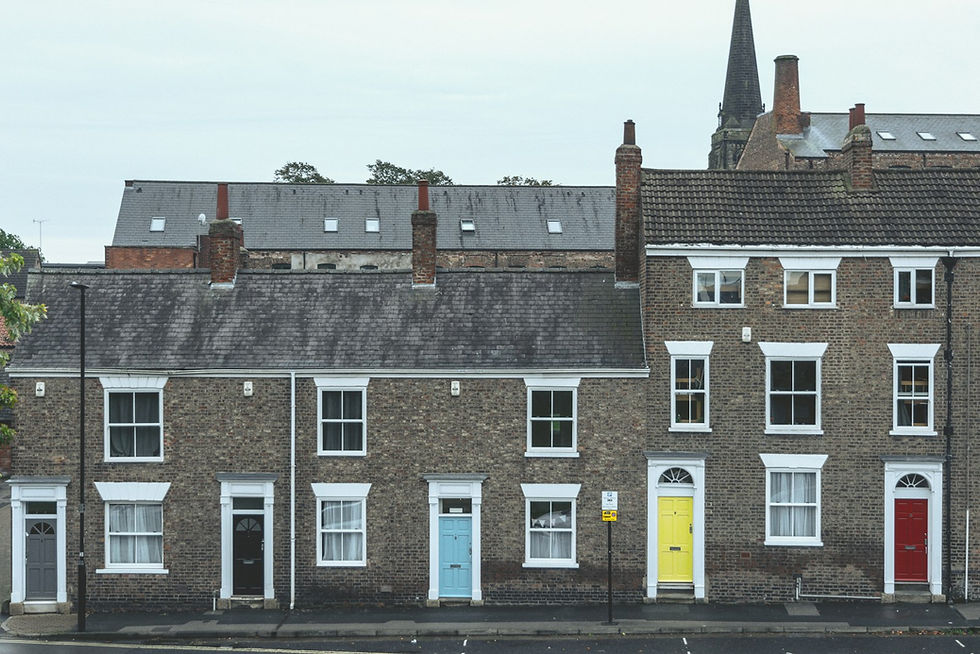
If you live in a conservation area or a listed building, check with the council before a colour change on the front elevation.
What makes exterior paint fail early
Most early failures trace back to one of a few causes:
Painting over damp walls or timber, which blisters as the moisture tries to escape.
Skipping repairs, so cracks and rot keep moving under the new paint.
Non-breathable coatings on walls that need to breathe.
Painting in poor weather, with rain, dew or frost hitting the paint before it has cured.
Poor adhesion over chalky, dirty or glossy surfaces that weren't stabilised, cleaned or keyed.
How long does exterior paint last?
It depends on exposure, colour, surface and prep. A good masonry paint on sound, well-prepared render typically lasts many years; manufacturers give a guidance life. Timber usually needs attention more often than walls, especially south- and west-facing joinery that gets the most sun and rain.
Exterior painting questions, answered
Do you need planning permission to paint your house?
Usually not. Painting a house in England is normally permitted, but listed buildings, conservation areas with an Article 4 direction and some new-build estates with covenants can restrict colours or finishes. Check first if any of those apply.
Can you paint in winter?
Some products are formulated for lower temperatures, but frost, damp walls and short days make winter painting risky. Plan for the warmer months.
How many coats of masonry paint do you need?
Two coats is standard, applied as the manufacturer directs.
Planning the job
Exterior painting is worth planning around the repairs and the weather rather than a date. Our team handles the repairs, access and decorating as one job across Kettering and Northamptonshire. See our painting and decorating in Kettering page. Inside the house, one of the most popular refreshes is covered in our guide to how to paint kitchen cupboards.


Comments